
Technical Notes
What Is a Solvent TIJ Cartridge? Complete Guide for Non-Porous Coding
A solvent TIJ cartridge is a 42 ml thermal inkjet cartridge filled with a fast-drying solvent ink, built for metal, glass and PET where a water-based code beads or wipes off. What the carrier does on a running line, when it is the wrong choice, and the six questions worth settling first.
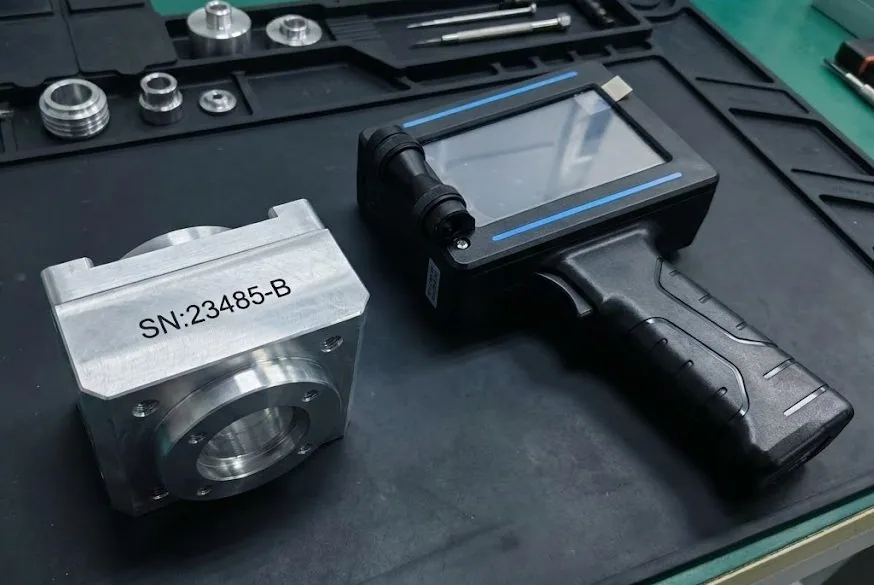
A solvent TIJ cartridge is a thermal inkjet cartridge filled with solvent-based ink, built to print on non-porous surfaces — metal, glass and plastic — where ordinary water-based ink beads up, smears or wipes off.
A standard cartridge holds 42 ml, fires through 300 nozzles and prints at a native 300 dpi, up to 600 dpi depending on model and print mode. If your surface does not absorb water, this is usually the cartridge you need. If it does, you probably do not.
That distinction explains most buying mistakes in this category. Buyers compare prices first and ask about the surface later; the order should be reversed. Ink chemistry decides whether a code stays on the product. Everything else matters after that.
How the technology actually works
TIJ is the print technology. A resistor inside each nozzle heats a tiny amount of ink until a vapour bubble forms, pushes a droplet onto the surface, then collapses so the nozzle can fire again.
There is no pump, air supply or external tank. The cartridge carries the ink, the nozzles and the printhead in one sealed unit — so changing a cartridge also changes the printhead. That is why TIJ lines stay clean and simple, and why cartridge quality shows up so directly in print quality.
A solvent cartridge uses the same mechanism with a different ink. The carrier is a fast-evaporating solvent rather than water, and it does two jobs water cannot do on a smooth surface: it wets the surface instead of beading on top of it, and it grips just enough for the pigment to hold as it evaporates. What remains is a dry, bonded print — a date code, batch number, barcode or logo that survives handling, stacking and transport.
On a running line
The workflow is deliberately boring. The cartridge clicks into the printer, a sensor detects each product, and the printer lays the code down in a single pass with no contact. The solvent flashes off within seconds on most smooth surfaces, so products can be packed or shrink-wrapped shortly after printing — no drying tunnel, no curing lamp.
Three variables decide whether that becomes a clean code or a daily headache.
Distance. TIJ droplets travel a short distance, so the head must sit close to the surface — typically within a few millimetres. A wobbling conveyor or a curved bottle shoulder can move the surface out of range and blur the print.
Surface condition. Dust, oil, condensation and mould-release residue sit between ink and surface. Solvent tolerates more than aqueous, but it cannot bond through grease. A surface that prints well in a dry morning trial can fail on a humid afternoon.
Idle time. Solvent evaporates fast, so it can also dry inside an open, idle nozzle. How long a cartridge can sit uncapped before the first print needs a purge depends on the formula and the environment — confirm it against test data for the exact model rather than a generic datasheet. Lines that print in bursts plan a capping routine or a short purge at restart.
If you are matching a cartridge to a material for the first time, work through the substrate matching guide before ordering in volume. It covers the surface checks that decide which ink family fits.
Solvent, aqueous or UV: which one do you need?
Three ink families, three different surface problems. Picking the wrong family cannot be fixed by a more expensive printer.
| Ink type | Best surface | What sets the ink | Watch out for |
|---|---|---|---|
| Aqueous (water-based) | Porous carton, paper, wood | Soaks into the surface, no extra equipment | Smears on plastic and metal |
| Solvent | Metal, glass, PET, film | Evaporates in seconds, no extra equipment | Needs capping when idle |
| UV-curable | Non-porous, high durability | UV light cures it, needs a UV curing lamp | Lamp cost, line integration |
Aqueous is the default for cartons and paper because the surface does half the work: the liquid soaks in and takes the pigment with it. Put the same ink on a PET bottle and it has nowhere to go — it stays wet, smears at the first touch, wipes off with a thumb.
Solvent exists for exactly that failure case. Because the carrier evaporates instead of absorbing, the print does not depend on pores, so it works on the smooth sealed materials that dominate food, beverage, cosmetics and electronics packaging — with no extra equipment. There the ink is typically dry to the touch in 1–5 seconds: a range published for the ink class, not a promise for your line, which is why the trial at your own speed still matters.
UV-curable ink stays liquid until UV light hardens it. Very durable, but the line needs a matched curing lamp, and setup and integration cost more.
One boundary worth stating because a comparison table can mislead: we supply solvent, water-based, oil-based and covert UV inks. We do not supply UV-curable ink or curing systems. It is in the table because it is the right answer for some durability targets and you will meet it while comparing — not because it is ours.
One limit applies to all three: no ink family compensates for poor surface preparation. Treat any claim of universal adhesion with suspicion, including ours.
Specifications that actually decide the purchase
Datasheets list many numbers. Only a handful decide whether a cartridge fits your job.
| Specification | Typical value here | Why it matters |
|---|---|---|
| Ink volume | 42 ml | Sets run length between changes |
| Nozzles | 300 | Supports resolution and print height |
| Resolution | 300 dpi native, 600 dpi max | Barcode and small-text sharpness |
| Print height | 12.7 mm or 25.4 mm | How tall your code can be |
| Cartridge price | USD 28–58 | Starting point for cost per print |
| Minimum order | 160 cartridges | Matters for trial and OEM orders |
Print height is the first filter. A 12.7 mm half-inch cartridge covers most date and batch codes in one pass. For several lines, a larger logo or a taller barcode, a 25.4 mm one-inch cartridge prints it in a single pass instead of stitching two. Choose by the tallest code you print, not the average one.
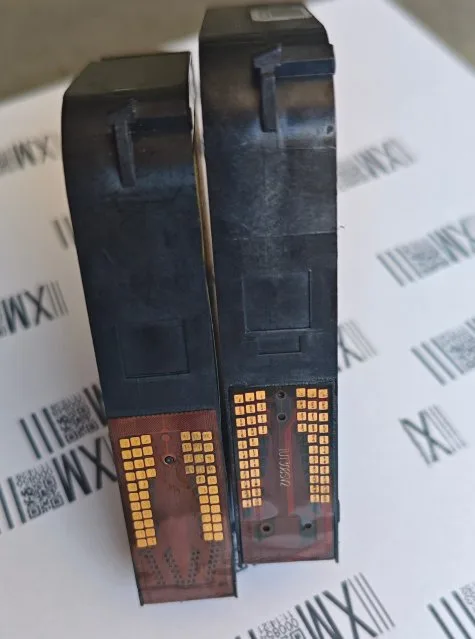
Resolution is the second. Native is 300 dpi, with 600 available by model and print mode. For readable dates and batch numbers 300 dpi is already sharp. Resolution earns its keep on machine-readable codes: a dense barcode or small QR can look fine and still fail a scanner. If your codes are scanned downstream, test scanning on a real printed sample, not a screen preview.
Ink volume and price belong together — the cost section below explains why cartridge price alone is the least useful number here. Current models and published pricing are on the solvent ink cartridge range and the pricing page.
Which materials it prints on
Most non-porous packaging — with a different caveat for each. The table is a starting point for trials, not a promise for a specific product.
| Material | Typical use | What to check in a trial |
|---|---|---|
| Aluminium and tinplate | Cans, caps, foil seals | Oil or coating on the surface |
| Glass | Bottles, jars | Condensation on cold-filled glass |
| PET and rigid plastic | Bottles, containers, caps | Surface treatments and silicones |
| PE and PP film | Pouches, shrink film, labels | Low surface energy, film movement |
| Coated carton | Glossy retail boxes | Coating type, rub resistance |
Each row is one section of the adhesion guide by substrate — same four questions every time: what usually goes wrong, what to check before a trial, how to judge drying, and what to do when the print fails.
The photographs below are our own test prints, one per surface. They show what the ink did on our bench on the day; they do not promise the same on your material. Captions name the surface only, and the last two are porous boards — included because buyers ask, not because solvent is the right answer there.
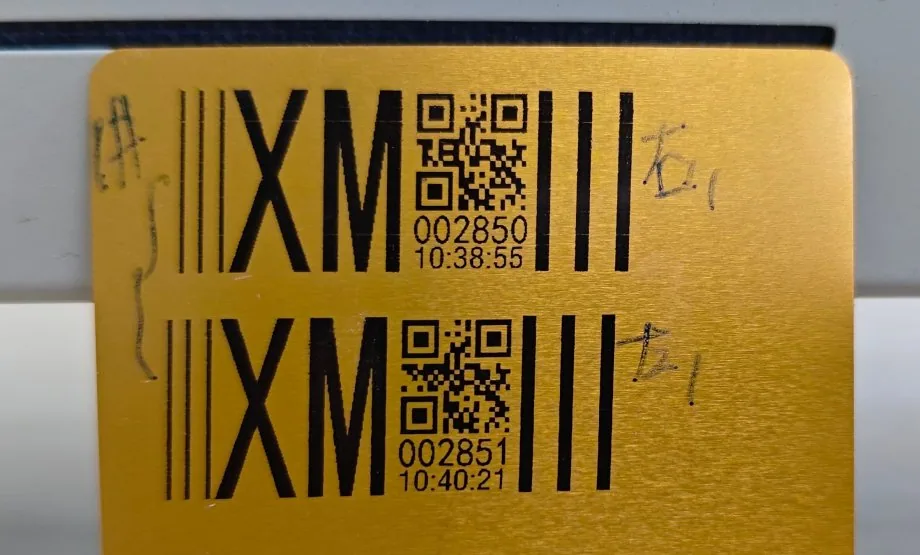
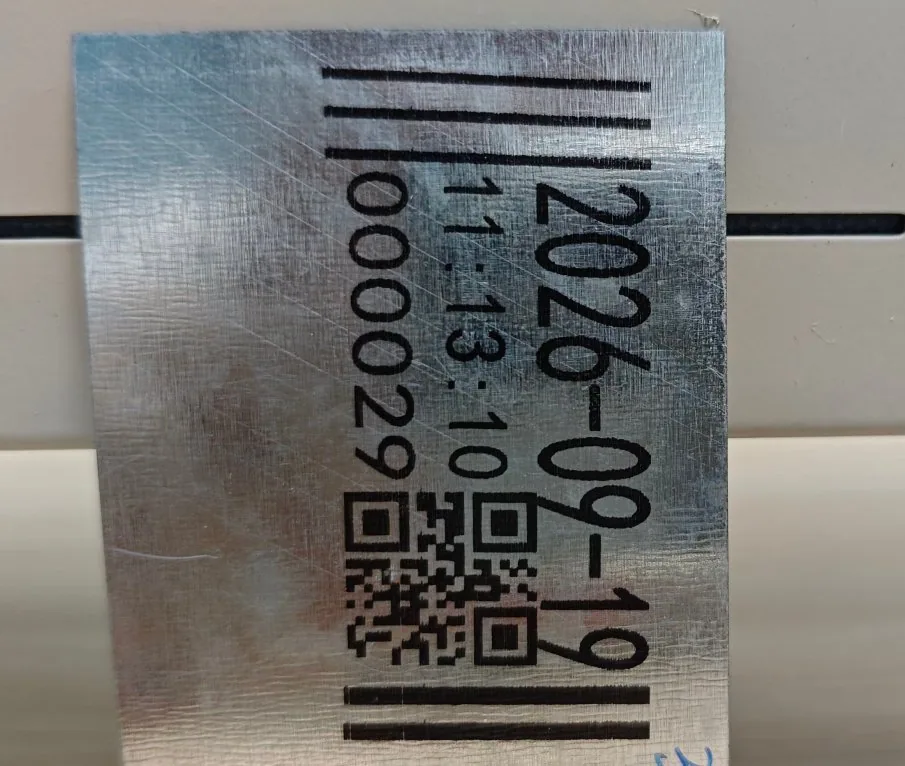
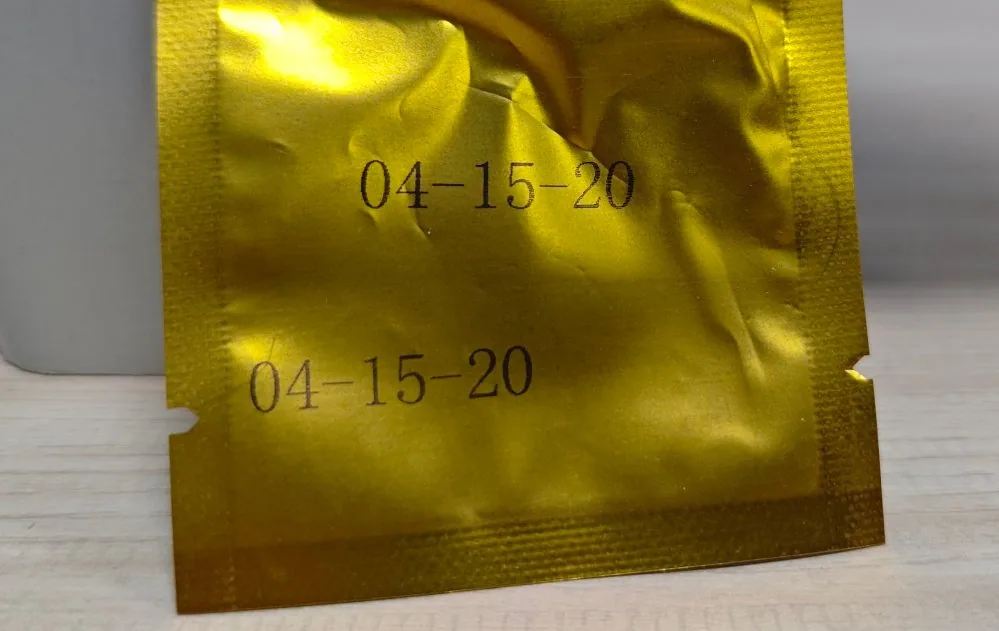
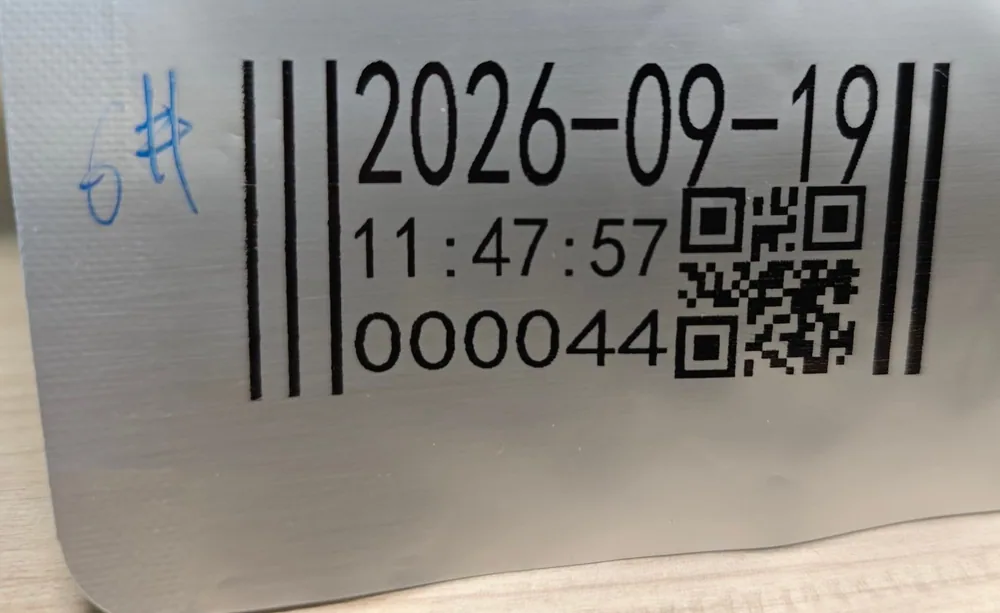
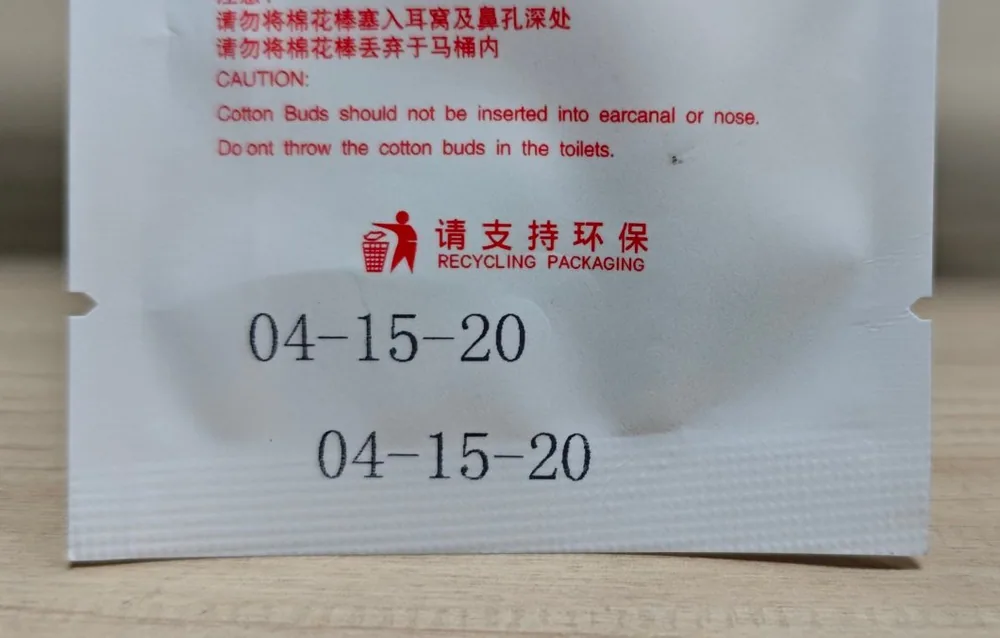
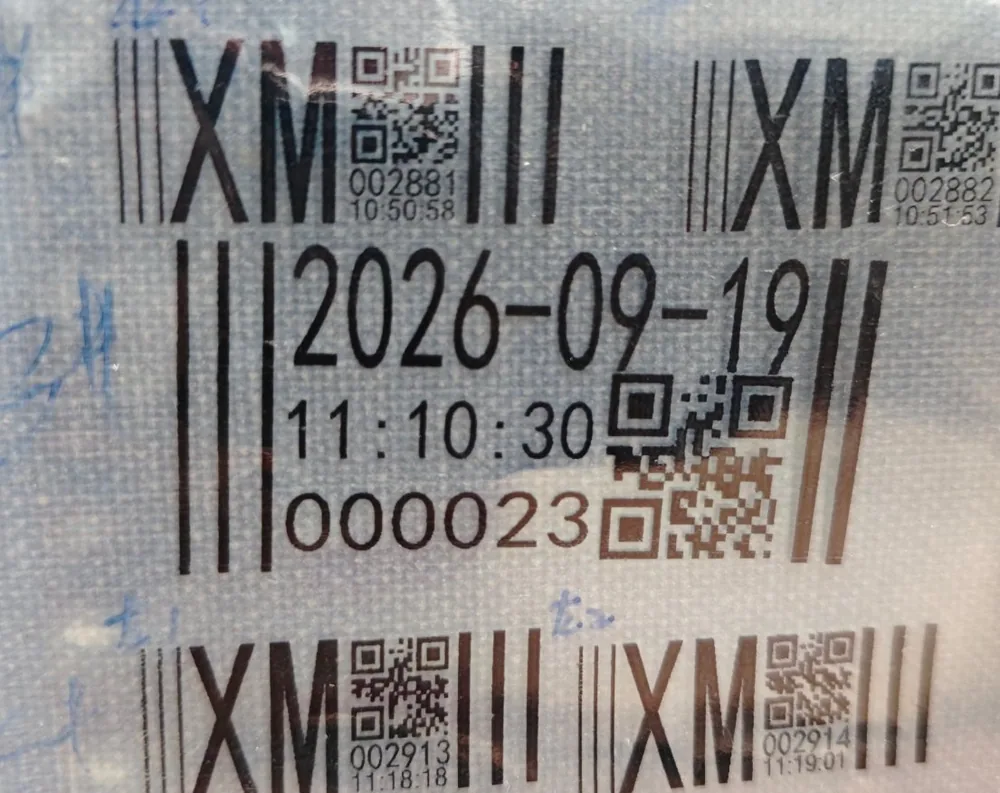
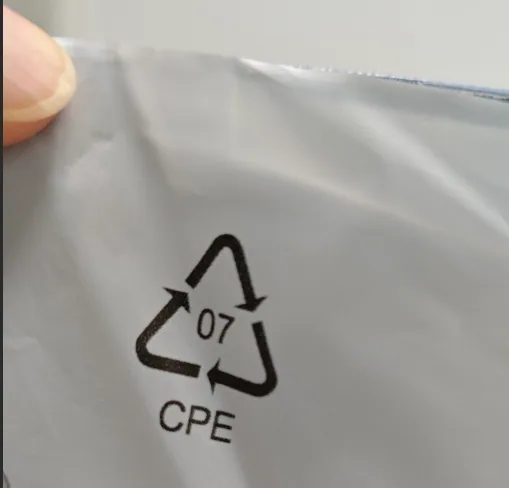
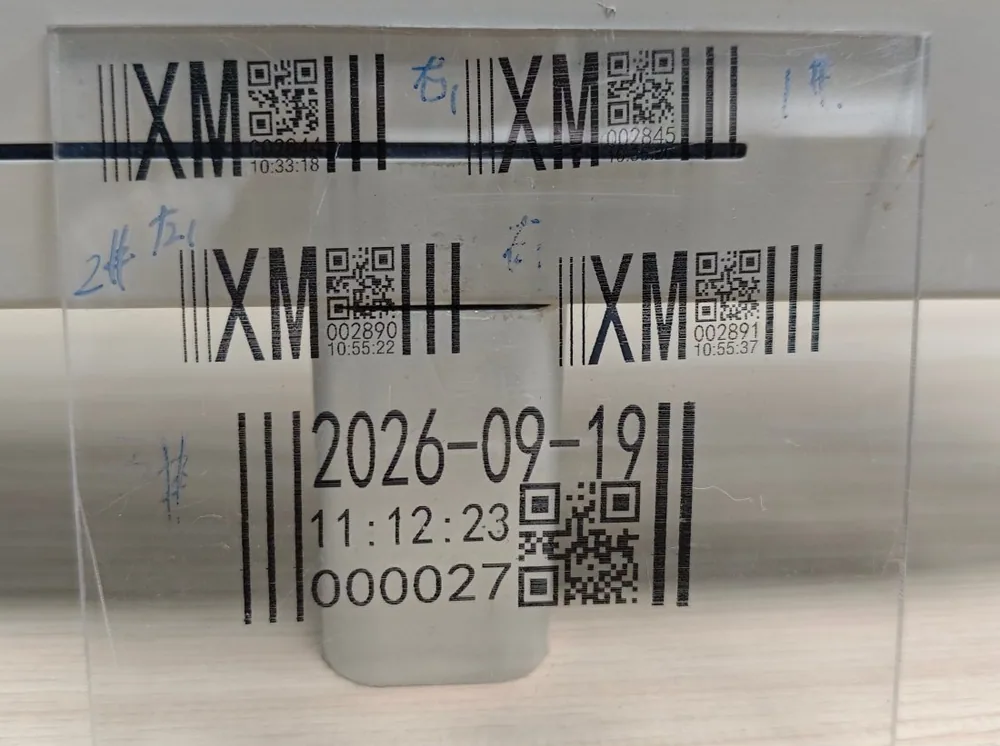
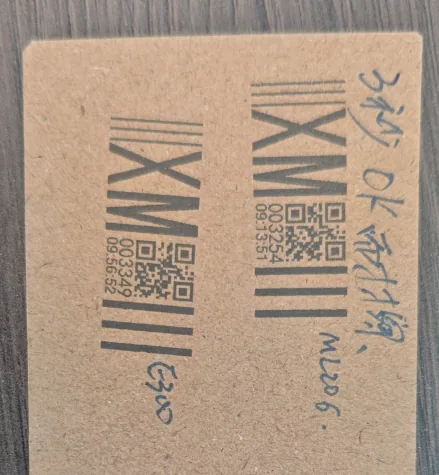
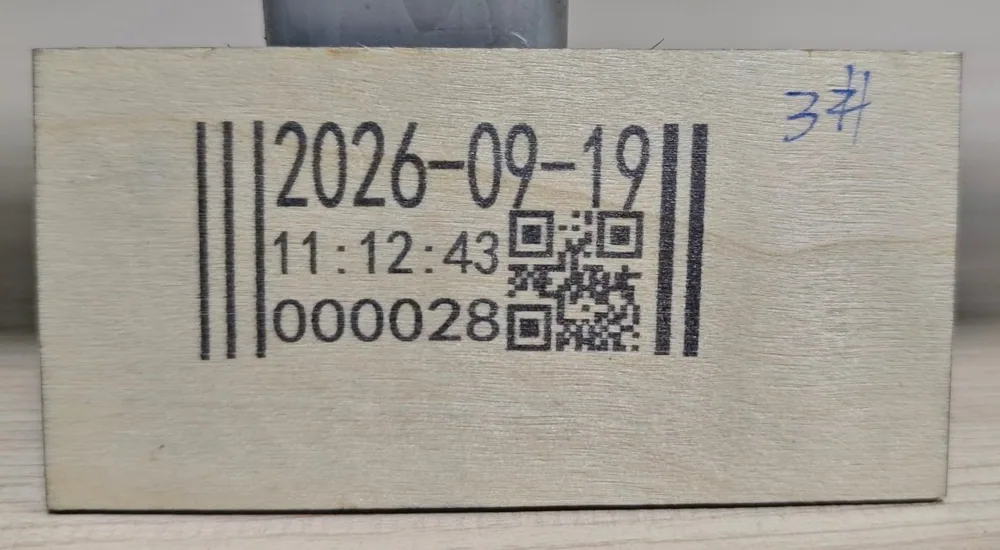
Metal is usually the most forgiving. Can ends, caps and foil seals take solvent ink well if the surface is free of forming oils. If prints wipe off, clean a sample and print again before blaming the ink — residue is the more common cause.
Glass prints well but adds temperature. A cold-filled bottle in a warm hall grows condensation, and ink printed onto water will not bond. Code glass before filling, after it reaches room temperature, or where the surface stays dry.
PET and rigid plastics are the core use case and normally reliable. The exceptions are surfaces treated with slip agents, silicones or anti-static coatings, which quietly defeat adhesion — which is why two seemingly identical bottles from different suppliers can print differently with the same cartridge.
PE and PP film are the hardest common surfaces: low surface energy, so liquids bead. Untreated PE and PP sit at roughly 26–32 mN/m, and a coding ink needs the substrate about 8–10 mN/m above its own dynamic surface tension, which is why treatment usually lifts it to around 38–42 mN/m. Many films print acceptably once that treatment is in place and dated; some need a specific variant. This is where a sample test matters most.
Coated carton sits in between. A matte coating may still absorb ink; a glossy UV-coated box behaves like plastic. If the coating is unknown, test both ink types on the real box and compare rub resistance after drying.
In every case the trial method is the same: print on the actual product, let it dry, rub and scratch it lightly — and if the product will be refrigerated, frozen or wiped with alcohol, test that too.
When not to use one
A guide that only lists strengths is a sales page, so here are the cases where this cartridge is the wrong tool.
- Plain porous cartons, if aqueous already works. You would pay more to solve a problem you do not have.
- Lines where the print position cannot stay close and stable. If products swing or vary widely in shape at the print point, fix the handling first or evaluate a technology built for a longer throw distance.
- Codes that must survive aggressive chemicals, heavy abrasion or long outdoor exposure. Solvent TIJ codes are durable for normal packaging life; extreme conditions are a separate requirement — state it up front and ask for a test against it specifically.
- Any bulk order before a sample run. A demonstration video shows a cartridge on the demonstrator’s surface, at their speed, in their room. Your material, speed, temperature and humidity are the only test that predicts your production.
How long it lasts, and what it really costs
Two kinds of cartridge life get mixed up. Shelf life is how long a sealed cartridge stays usable in storage. Working life is how many prints it delivers on your line — and that depends on what you print: a two-line date code uses a fraction of the ink of a large logo or dense barcode. Any single prints-per-cartridge figure quoted without its message, resolution and speed is not a number you can plan with.
Which is why cost per print, not cartridge price, is the fair comparison. The full method — including the hidden costs a good-print count has to absorb — is in what a solvent TIJ cartridge really costs. The arithmetic:
Cost per 1,000 prints = (cartridge price ÷ prints per cartridge in your trial) × 1,000
Run a counted trial: note the good prints one cartridge produces with your message on your product, then divide. Two cartridges at different prices often reverse their ranking under this formula — a cheaper cartridge that needs a lower speed, a second pass or more frequent purges is not actually cheaper. Include hidden costs even as estimates: rejected products, line stops, reprinting labour. Cartridge price alone optimises the smallest part of the total.
Published pricing and order quantities are on the pricing page, the right starting point before you run your own trial numbers.
Six questions to work through in order
The first two eliminate most wrong options; the rest fine-tune the choice.
- What is the surface? Name the exact material and finish — not just “plastic”, but the bottle, film or coating you run, including any surface treatment.
- Is it porous? If water soaks in, start with aqueous. If it beads on the surface, start with solvent.
- How tall is the code? Measure the tallest message, including every line and any logo. That decides 12.7 mm versus 25.4 mm.
- Will the code be scanned? If so, plan a scanning test on printed samples and consider the higher-resolution mode.
- How does the line run? Continuous, short bursts and long idle gaps demand different things. Include overnight and weekend shutdowns.
- What must the code survive? Handling and stacking at minimum; refrigeration, freezing, moisture or alcohol contact if your product meets them.
Send those six answers to any supplier you evaluate — including us — and ask for a sample matched to them. A supplier who asks these questions before quoting is a good sign; one who quotes a bulk price without asking about your surface is selling cartridges, not solving a coding problem.
The questions separate one category from another. Comparing two solvent grades against each other is a different exercise, worked through in seven checks before buying solvent TIJ cartridges.
Sourcing at manufacturer level goes further: batch consistency, chip compatibility, packaging, lead time, and what happens when a batch underperforms. The manufacturer overview sets out how production and quality checks are organised, and the OEM and ODM programme covers private-label process, quantities and lead times.
A worked application: date coding on PET bottles
A beverage or cosmetics filling plant needs a production date and batch number on finished PET bottles before they are packed into shrink-wrapped trays. Two lines of text — inside the 12.7 mm print height of a half-inch cartridge. The surface is smooth and non-porous, the line runs long shifts, and the code must stay readable after stacking, transport and storage, sometimes in a refrigerated warehouse.
The first attempt in many plants is the aqueous cartridge already on the shelf for outer cartons. On PET it fails predictably: the code looks acceptable while wet, then smears when the shrink film is applied or wipes away in handling. The printer and the operator are fine. The ink family is wrong for the surface.
Switching to a solvent cartridge addresses the cause: the carrier wets the PET instead of beading, evaporates shortly after printing, and leaves a bonded code that can be handled soon after the print point. The remaining checks are practical — keep the head close and steady on a curved surface, watch for condensation on cold-filled bottles, rub-test after drying, and confirm the code still reads after a night in the cold store.
This example promises nothing about your bottles and puts no number on drying or adhesion, because those depend on the bottle, the ink variant and the line. It shows the decision path: identify the surface, match the ink family, prove it on your own product before committing to volume.
Storage and handling
Four habits cover most of it.
- Store sealed cartridges in their original packaging, away from sunlight and heat, within the range in the product documentation. Heat accelerates evaporation and shortens shelf life.
- Keep the protective cap on whenever a cartridge is out of the printer. An uncapped cartridge on a bench is slowly drying at the nozzle plate — the same evaporation that makes the ink useful works against you in open air.
- Wipe the nozzle plate only as directed, with a lint-free cloth, never a dry abrasive material. It is a precision surface with 300 openings; rough wiping causes more defects than it cures.
- Rotate stock: oldest first, delivery dates noted on the box. A smaller, fresher inventory prints better than a large old one at the same unit price.
Summary: the surface decides, the cartridge follows
A solvent TIJ cartridge is a 42 ml thermal inkjet cartridge whose fast-evaporating ink bonds to non-porous surfaces — metal, glass, PET and many films — where aqueous ink cannot hold. Native 300 dpi, up to 600; 12.7 mm and 25.4 mm print heights; no drying or curing equipment; capping discipline required when idle.
Choose in this order: identify your exact surface, confirm whether it is porous, match the ink family, size the print height to your tallest code, then compare on cost per 1,000 prints measured in your own trial — never on cartridge price or a demonstration. That trial, on your product at your speed, is what turns a specification into a code that is still readable when your customer opens the box.
Frequently asked questions
Can a solvent TIJ cartridge print on cardboard?
It can, but it is usually the wrong choice for plain uncoated cardboard: porous carton absorbs aqueous ink well at lower cost. Solvent becomes relevant on coated or glossy carton, where the coating seals the surface and aqueous can smear. Test on the actual box if the coating is unknown.
Is a solvent TIJ cartridge the same as an HP45 cartridge?
The format is HP45-format, used in printers built for HP45 cartridges. The ink inside is what differs — the same format can hold aqueous, solvent or other inks. Confirm format, ink type and chip compatibility with your printer before ordering. The difference between the original 45-type cartridge and a solvent cartridge in the same body is set out in HP 45A black solvent ink cartridges.
How fast does solvent TIJ ink dry?
On most smooth non-porous surfaces the print is dry to handle within seconds, so products can be packed shortly after printing with no extra drying equipment. Exact drying time depends on the ink variant, material, print thickness and line temperature and airflow, so confirm it in a trial at your own line speed.
Will the print survive refrigeration or freezing?
In many cold-chain applications it does, depending on the material, the ink variant and whether condensation forms during temperature changes — condensation is the usual failure point, not the cold itself. Include a cold-store check in your sample test: print, refrigerate under your normal conditions, then rub-test.
What is the minimum order, and can I test first?
The published minimum is 160 units, with pricing in the USD 28–58 range depending on model. Testing first is the recommended route: send your material details, run samples on your own product and line, then commit to volume. Use the contact page to describe your surface and line conditions.
Can solvent TIJ cartridges be supplied under a private label?
Yes. Private-label and OEM supply covers custom labelling and packaging; process, quantities and lead times are on the OEM and ODM page. The technical evaluation comes first — surface, printer compatibility, sample results.
Related reading
- 27 October 2026
Solvent TIJ Cartridge on Metal, Glass & Plastic: Adhesion Guide
Adhesion on metal, glass, PET and PE/PP film fails for five different reasons, and the cartridge is rarely the…
- 30 October 2026
How Solvent TIJ Cartridges Are Made: Inside a Manufacturer's Line
A solvent TIJ cartridge is not bought parts relabelled. It is ink formulated and filtered, a body prepared and…
- 29 October 2026
How Much Does a Solvent TIJ Cartridge Really Cost? Cost per 1,000 Prints
USD 28–58 buys a solvent TIJ cartridge, and that number decides nothing. What reaches your margin is the cost …
Want this confirmed on your own material?
We print on samples of your actual substrate and send them to you. Send the material, the line speed and the code content, and we will tell you honestly whether the fault is the ink, the surface or the line layout.